
Anger in Relationships: What Your Anger Is Really Trying to Tell You
Anger is one of the most common reasons people seek help for relationship issues.
Not because they want to be angry, but because it keeps showing up, often in ways that feel confusing, overwhelming, or out of proportion.
You might find yourself asking:
Why do I get so angry at my partner?
Why do small things turn into big fights?
Why do I feel misunderstood, even when I explain myself?
Anger in relationships is rarely just about anger.
More often, it’s a signal that something underneath hasn’t been heard yet.
Why Anger Shows Up So Often in Relationships
Relationships activate our deepest emotional wiring. When we care about someone, their words, tone, or distance can register as threats to connection, even if that’s not their intention.
Anger tends to surface when:
We feel unseen or dismissed
Our needs feel ignored or minimized
We don’t feel emotionally safe enough to be vulnerable
We’ve asked for something repeatedly and nothing changes
In these moments, anger can be seen as a protective response.
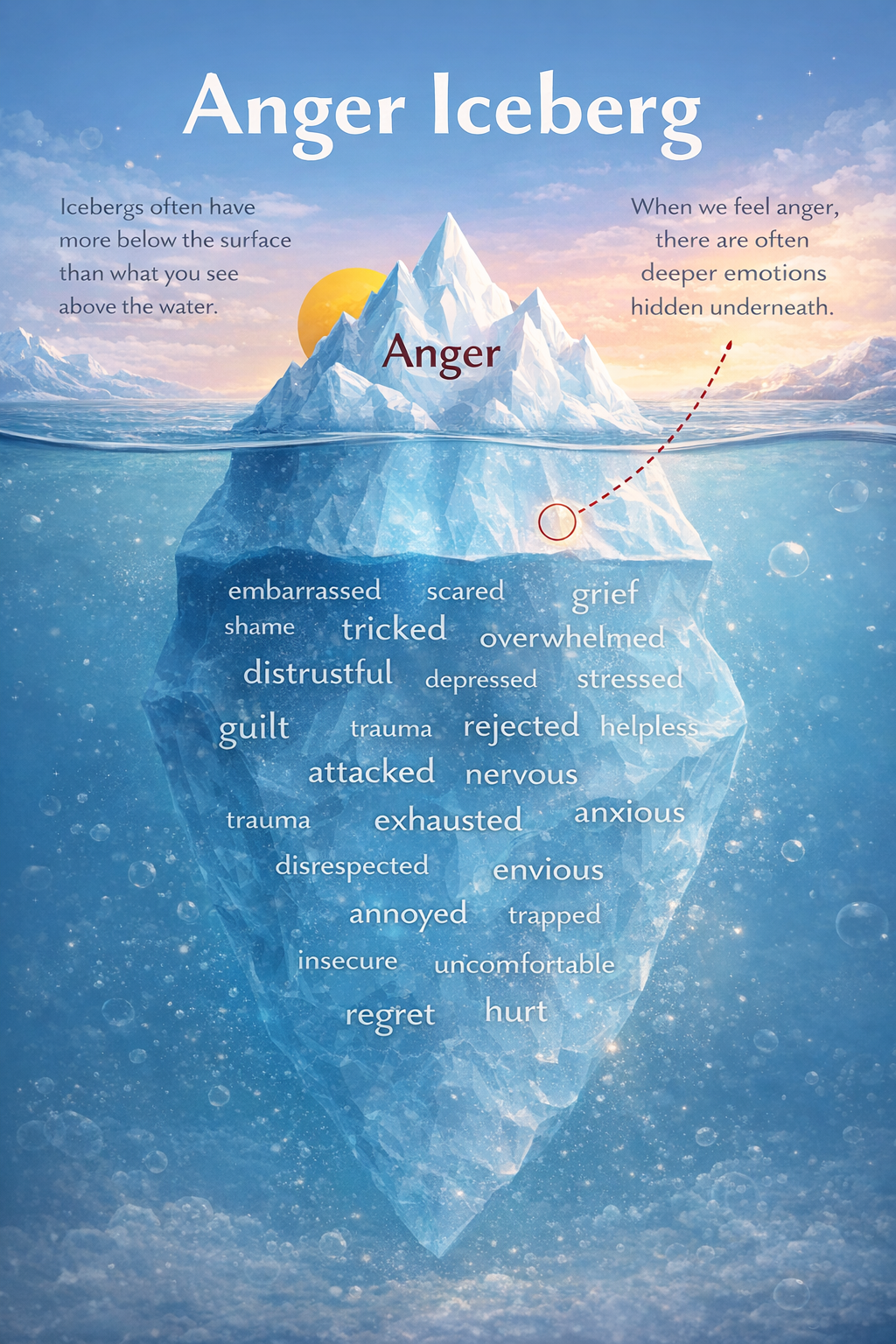
The Anger Iceberg in Relationships
Anger is often the visible emotion, but it usually sits on top of other feelings that feel more vulnerable to express.
Underneath relationship anger, people commonly find:
Hurt
Fear of rejection or abandonment
Loneliness
Shame
Disappointment
Grief over unmet expectations
Anger rises quickly because it feels stronger and safer than saying:
“I feel unwanted.”
“I’m scared you’ll leave.”
“I don’t feel like I matter to you.”
“Why Do I Get Angry Over Small Things?”
This is one of the most searched questions about relationship anger, and it’s an important one.
Often, the small thing isn’t the real issue.
The argument about dishes, texts, or tone of voice is usually sitting on top of:
Accumulated resentment
Unspoken needs
Old wounds being touched repeatedly
Feeling chronically unheard
When these experiences stack up, your nervous system goes on high alert.
Anger becomes faster, louder, and harder to contain, because your system is overwhelmed.
When Anger Is About Connection, Not Conflict
In many relationships, anger is actually a protest for closeness.
It can sound like criticism, defensiveness, or withdrawal, but underneath is often a longing for:
Reassurance
Understanding
Emotional presence
Repair after disconnection
Paradoxically, anger can be the way someone says:
“I care, and I don’t know how to reach you.”
How Childhood Experiences Shape Adult Relationship Anger
Our early experiences teach us what emotions are allowed and how needs get met.
If you grew up:
Having to stay quiet to keep the peace
Being criticized for expressing feelings
Learning that vulnerability led to rejection
You may have learned to suppress softer emotions like sadness or fear.
Anger, then, becomes the emotion that breaks through when the system can’t hold everything in anymore.
This doesn’t mean your reactions are wrong.
It means they were shaped in contexts where protection mattered.
Why Anger Can Feel So Hard to Control
When anger shows up in relationships, it’s often linked to the nervous system’s fight response.
This can look like:
Raising your voice before you realize it
Feeling flooded or overwhelmed during conflict
Wanting to withdraw or shut down afterward
Feeling regret or shame once things calm down
These aren’t signs of being “bad at relationships.”
They’re signs your system is trying to defend against emotional threat.
What Helps, Beyond “Anger Management”
Many people search for how to control anger, but control alone rarely leads to lasting change.
What actually helps is:
Understanding what your anger is protecting
Slowing down enough to notice what comes before the explosion
Learning how to express needs without self-abandoning or attacking
Creating safety for repair, not just conflict avoidance
Anger softens when it no longer has to shout to be heard.
When to Seek Support for Relationship Anger
If anger feels frequent, intense, or is impacting your sense of safety or closeness, support can help.
Working with a therapist can create space to:
Understand your anger without judgment
Identify patterns that keep repeating
Learn how to communicate needs more clearly
Rebuild emotional safety, with yourself and others
You don’t have to eliminate anger to have a healthy relationship.
You just need help listening to what it’s been trying to say.
